The whole loop, in one scroll.
Three acts: your team describes the work, the AI ranks what's worth fixing, and the build board turns decisions into shipped automations.
If you can answer “what happens next?”, you can map.
A team member types — or dictates — how their work actually happens: “I download the supplier file, fix the sizes, email it to stores…” Entrilla turns it into a structured workflow while they talk. No flowchart tools, no training, no workshop. The person who does the job verifies the map, and their name is on it.
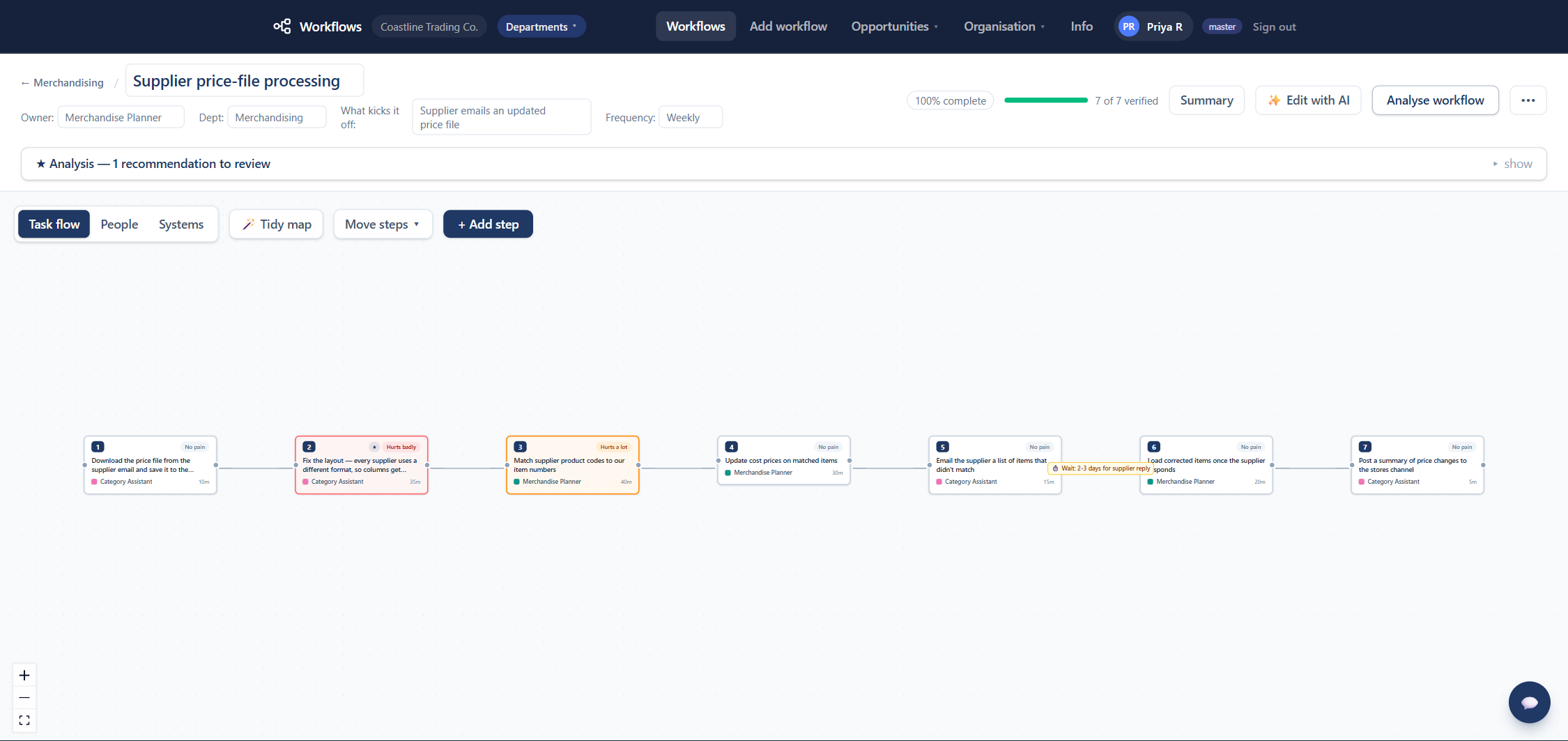
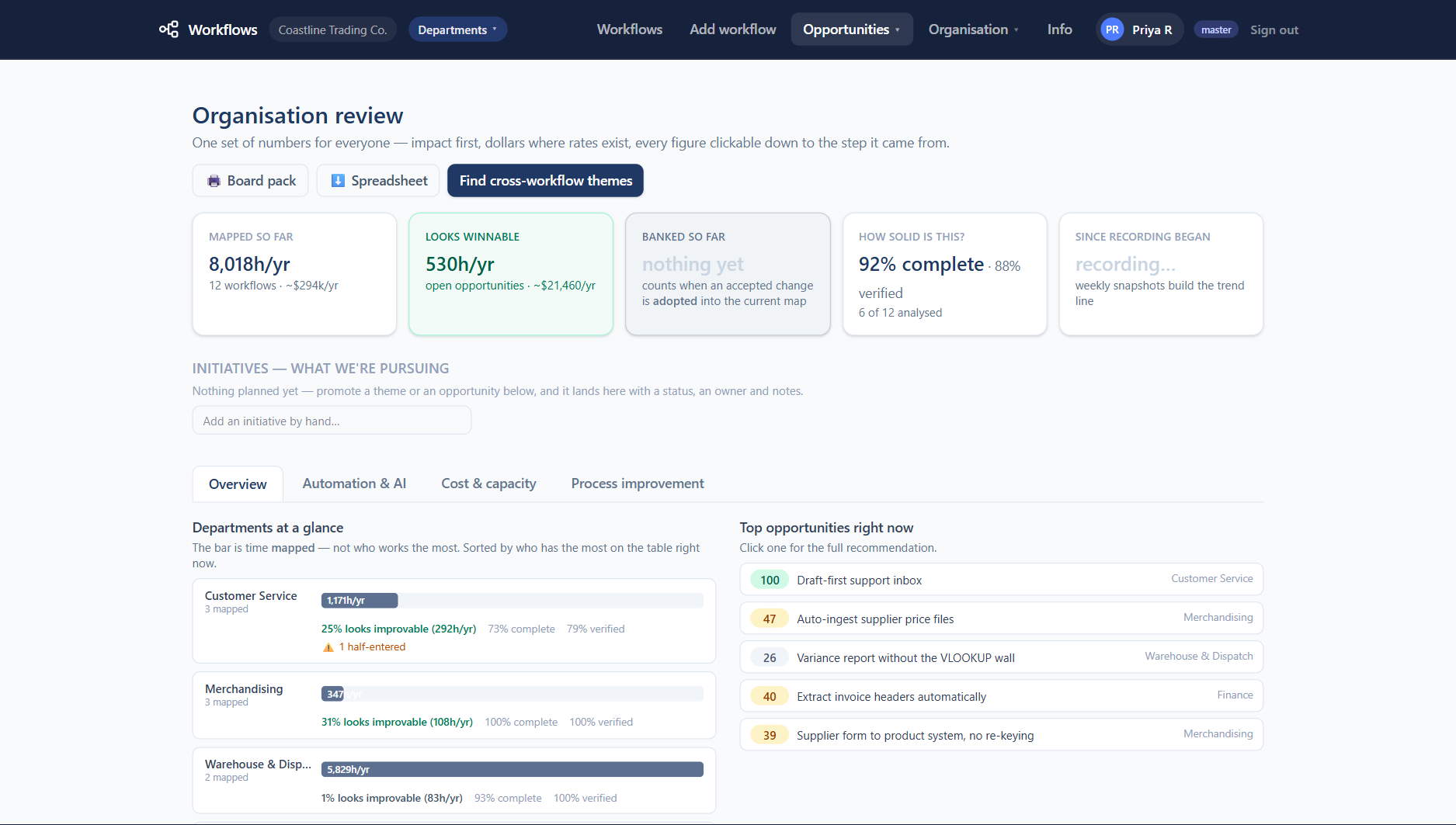
Entrilla reads every workflow and ranks what's worth fixing — in dollars and hours.
The organisation review reads across every department at once and surfaces the top opportunities, each costed from what your team actually said: hours per year, people affected, effort to build. No industry benchmarks, no invented numbers — every figure is traceable to a step someone described.
The grounding rule: every recommendation is built only from tools you actually have, and cites the exact descriptions it came from.
Three concrete options per opportunity. You pick.
Every opportunity becomes a card on the build board with three plays — the build-now version using only what's on your shelf, the 80/20 version, and the ideal. Each play arrives as a spec, not a pitch: what to build, what it takes, which ingredients. Nothing moves without a human decision.
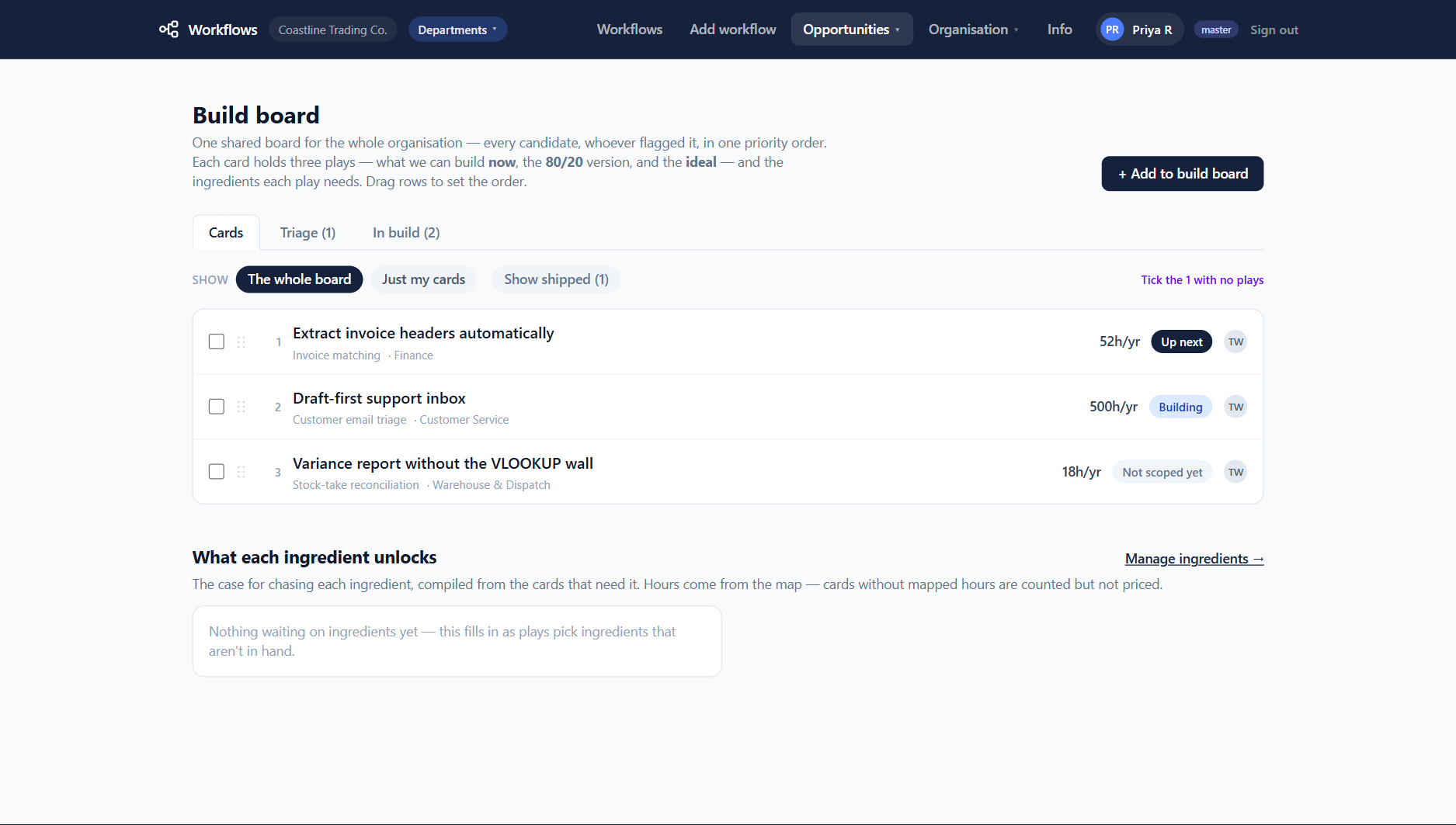
Where Entrilla stops: it organises the opportunities — your project tracker (Asana, Jira, whatever you run) tracks the work, and your own developers or platforms do the building. Entrilla doesn't replace either, and doesn't pretend to.